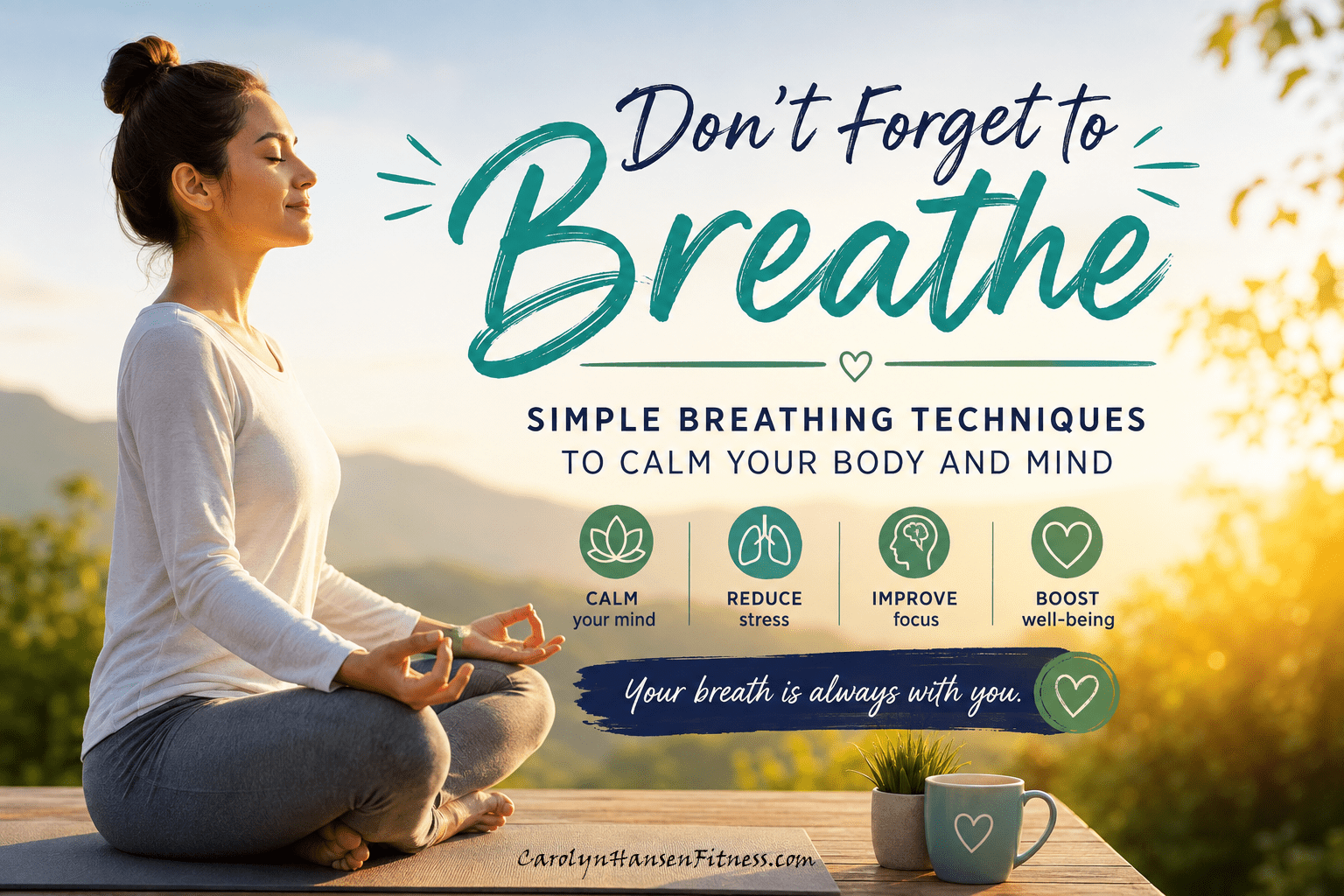
“Don’t forget to breathe.” …How often have you heard that, especially when you’re stressed or under pressure?
“Take a deep breath” is one of the first things people say when trying to calm someone down, and there is a very good reason for that. Truth is proper breathing is one of the simplest and most valuable tools we hae to help keep our minds balanced, our bodies relaxed and our stress levels under control.
Focus on the Breath
We breathe automatically thousands of times every day without giving it much thought. But the way we breathe can change dramatically when we become anxious, frightened, rushed or stressed.
Instead of taking slow, full breaths, we tend to breathe faster and more shallowly, often using the upper chest rather than allowing the diaphragm to do its job. Efficient breathing is crucial for delivering the oxygen the body needs to function properly. But breathing also sends important signals to the nervous system.
When you consciously slow your breathing, particularly your exhale, you are essentially telling your body, “It’s okay. You can settle down now.”
You can’t fully chill out if your body’s “fight-or-flight” engine is in full gear releasing adrenaline and stress hormones into your system. You need to calm the sympathetic nervous system while encouraging the parasympathetic nervous system—the system responsible for rest, recovery and relaxation—to take over.
This is why something as simple as changing your breathing can change the way you feel.
Stress Changes the Way We Breathe
Your body was designed to respond quickly to danger.
If you suddenly had to jump out of the way of an approaching car, you would want your heart beating faster, your breathing increasing and your muscles preparing for action. The problem is that modern life can trigger the same stress response even when there is no physical danger.
A difficult phone call, financial worries, traffic, work deadlines, family problems and even our own thoughts can keep the body’s stress response switched on far longer than nature intended.
Over time, living in a constant state of tension can affect sleep, digestion, concentration, energy levels and overall well-being.
Breathing gives us a way to interrupt that cycle.
You don’t need special equipment. You don’t need a gym membership. You don’t even need much time.
Your breath is always with you.
Breathing Techniques
Fine the one that works for you.
There are several different types of breathing techniques that can be employed, so there really is something for everyone. It’s simply a matter of trying a few and discovering what feels most comfortable and produces the greatest results for you.
Each technique brings something a little different to the table, so pay attention to how your body reacts.
Some techniques are calming.
Some help you focus.
Others can make you feel more alert and energized.
The goal is not to force your breathing into some perfect pattern. The goal is to use your breath consciously to help shift your physical and emotional state.
Here are a few techniques to try.
Nadi Shodhana –
Alternate Nostril Breathing
Nadi Shodhana has been practiced by yogis for centuries. The traditional purpose of this technique is balance—to create a sense of harmony between the two sides of the body and promote a calm, focused state.
After assuming a comfortable position, hold your right thumb gently over your right nostril while inhaling through the left nostril.
When the inhalation is complete, close the left nostril using your ring finger, release the right nostril and exhale through the right side.
Then inhale through the right nostril, close it with your thumb, release the left nostril and exhale through the left.
Continue alternating sides in this pattern for two minutes or longer.
Keep the breathing smooth and comfortable. There is no need to force a particularly deep breath.
Many people find alternate nostril breathing useful when they need to clear their mind, regain focus or create a sense of calm before tackling something stressful.
Guided Visualization
Guided visualization combines slow breathing with positive mental imagery.
Rather than allowing your mind to continue running through stressful thoughts, you deliberately give it somewhere peaceful to go.
Close your eyes and breathe slowly while imagining a place that feels safe, peaceful and relaxing to you.
It might be a quiet beach, a beautiful garden, a mountain trail or simply a favorite chair beside a sunny window.
Make the image as real as possible.
What do you see?
What sounds are around you?
Can you feel the warmth of the sun or a cool breeze against your skin?
As your breathing slows, allow your shoulders to relax, unclench your jaw and release any tension you notice in your body.
You can use this breathing technique any place you can safely find a quiet spot and close your eyes. Obviously, this is not one to practice while driving or doing anything that requires your full attention.
Even a few minutes can provide a valuable mental reset.
Progressive Relaxation
Progressive Muscle Relaxation teaches you to recognize the difference between a tense muscle and a relaxed one.
This is important because many people carry tension throughout the day without even realizing it.
You may be tightening your shoulders, clenching your jaw, squeezing your hands or tightening your stomach while sitting at your desk or even watching television.
Progressive relaxation involves deliberately tensing a particular muscle group for a few seconds and then releasing it while breathing slowly.
Start with your feet and work your way upward through your legs, abdomen, hands, arms, shoulders, neck and face.
As you gently tense each muscle group, inhale slowly through your nose. Then release the tension and breathe out through your mouth.
Pay attention to the difference between how the muscle feels when it is tense and how it feels when it is completely relaxed.
That awareness can help you recognize tension much earlier during your everyday life.
Caution: If holding your breath or breathing deeply makes you feel dizzy or uncomfortable, simply return to normal breathing. Breathing exercises should feel comfortable, not forced.
Simple Slow Breathing
Sometimes the simplest technique is the best one.You don’t have to remember a complicated pattern.
Sit comfortably and place one hand on your abdomen.
Breathe gently through your nose and allow your abdomen to expand naturally. Then exhale slowly and comfortably.
Try making the exhale slightly longer than the inhale.
For example, you might inhale comfortably for a count of four and exhale for a count of five or six.
Don’t become obsessed with counting. The numbers are simply there to help slow things down.
Continue for several minutes.
This can be particularly useful before bed, during a stressful day or anytime you notice your body becoming tense.
Your Breath as a Stress Signal
One of the most valuable things about practicing breathing exercises regularly is that your body begins to recognize the routine. Instead of waiting until you are completely overwhelmed, you can use your breathing at the first sign of stress.
Maybe your shoulders tighten.
Maybe your stomach knots up.
Maybe your heart begins beating faster.
Maybe your thoughts start racing.
That can become your reminder:
Breathe.
Over time, this creates a healthier response to stress. Instead of automatically allowing tension to build and build, you have a simple tool that helps you interrupt it.
There will always be comfortable situations and uncomfortable situations in life. You can’t experience the good in life without occasionally dealing with the difficult. It’s not a matter of “if stress hits”…stress will hit. What matters is how you deal with that stress when it arrives.
You cannot eliminate life’s ups and downs or the frustrations of daily setbacks, but you can proactively take steps to deal with them more effectively and put them back in their proper place.
And sometimes that begins with something as basic as breathing.
Conscious Breathing
Make conscious breathing a part of your day.
You don’t have to schedule an hour-long relaxation session to benefit from conscious breathing.
Try taking a few slow breaths before getting out of bed in the morning.
Pause and breathe before responding to a stressful email.
Take two minutes in the afternoon to close your eyes and reset.
Practice slow breathing before falling asleep.
You can even pair breathing with something you already do every day—waiting for your coffee to brew, sitting at a traffic light, taking a break from the computer or getting ready for bed.
There are also breathing and relaxation apps that can help pace your breathing and remind you to take a few minutes for yourself throughout the day.
The important thing is consistency.
Small healthy habits practiced regularly can have a much greater impact than big changes we only make occasionally.
Breathe for Your Body AND Your Mind
Good health is about more than exercising and eating nutritious food. Your mental and emotional state matters too.
Your body is constantly responding to the messages it receives from your environment, your thoughts, your habits and your daily choices.
Learning how to deliberately calm your nervous system gives you another powerful tool for taking care of yourself.
And unlike many health tools, your breath is free, available everywhere and something you already know how to do.
You simply need to start paying attention to it.
You can begin right now to take a personal, active role in protecting your health, reducing unnecessary stress and supporting greater longevity by taking care of both your body and your mind.
Every choice you make…every decision you make daily is either contributing to your health or working against it.
So the next time life starts moving a little too fast, remember one of the simplest pieces of advice you’ll ever receive:
Don’t forget to breathe.