We hear the word inflammation tossed around a lot these days. But what exactly is inflammation and why should we be concerned?
Inflammation is a process through which the body’s immune cells and chemical messengers work at protecting us from foreign substances such as viruses and bacteria. It also helps the body respond to injuries and begin repairing damaged tissues. These chemical messengers increase blood flow to the affected area, which can result in warmth, redness and swelling.
Think about what happens when you cut your finger or sprain an ankle. The area may become sore, swollen and tender as your body gets to work. Although uncomfortable, this temporary inflammatory response is an important part of healing.
The problem begins when inflammation continues long after it has served its purpose.
Instead of settling down once the threat has passed, the inflammatory response can remain active for months or even years. This is known as chronic inflammation, and over time it can damage healthy tissues and contribute to disease. Unlike an injured ankle, chronic inflammation does not always produce obvious swelling or redness. It can occur inside the body without being easy to recognize.
In autoimmune diseases, like rheumatoid arthritis, the immune system attacks healthy tissue even though there is no infection to fight in that tissue. The very system normally used to protect us ends up causing damage instead.
When this ongoing inflammation affects the lining of a joint, it can cause swelling, stiffness and pain. Over time, rheumatoid arthritis can also damage the cartilage and bone within the joint. However, not all arthritis is autoimmune, which is an important distinction when discussing joint health.
Obviously, out of control inflammation in the body is not a good situation to be in and can contribute to ill health.
Although we cannot control every factor involved, we do have some influence over the daily habits that support our health. And one place to begin is with the foods we regularly put on our plates.
Health Through Diet –
Certain eating patterns may encourage inflammation, particularly those built around sugary drinks, refined carbohydrates, processed meats and foods high in saturated fat. When these foods regularly crowd out vegetables, fruit, beans and other nourishing choices, the overall quality of our diet suffers.
This does not mean one slice of birthday cake or an occasional convenience meal will undo all your efforts. What matters most is the pattern you follow over time. The meals and snacks you choose day after day have a much greater influence than any single food eaten now and then.
Are there steps we can take to reduce the amount of inflammation in our bodies?
There are actually eating patterns designed to address this very issue. Often called anti inflammatory diets, they emphasize a wide variety of nourishing foods while limiting choices that offer little fiber and excessive amounts of added sugar or unhealthy fats.
Although each diet is presented slightly differently, many share the same basic concepts. Eat more plant foods, choose healthier fats, include suitable sources of protein and make heavily processed convenience foods a smaller part of everyday eating.
The Mediterranean diet is one familiar example. It emphasizes vegetables, fruits, beans, whole grains, nuts, olive oil and fish. Research suggests this overall eating pattern may help improve some measures of inflammation, although results vary depending on the person and the condition being studied.
The good news is that you do not have to purchase expensive specialty products or completely overhaul your kitchen overnight. Many useful ingredients are ordinary foods available at the local grocery store.
Start with a meal you already enjoy and look for an opportunity to improve it. Add vegetables to your favorite soup, mix beans into a casserole or serve fruit alongside breakfast. These simple additions help make healthier eating practical rather than overwhelming.
Superfoods –
What are some superfoods that can help us keep inflammation in check?
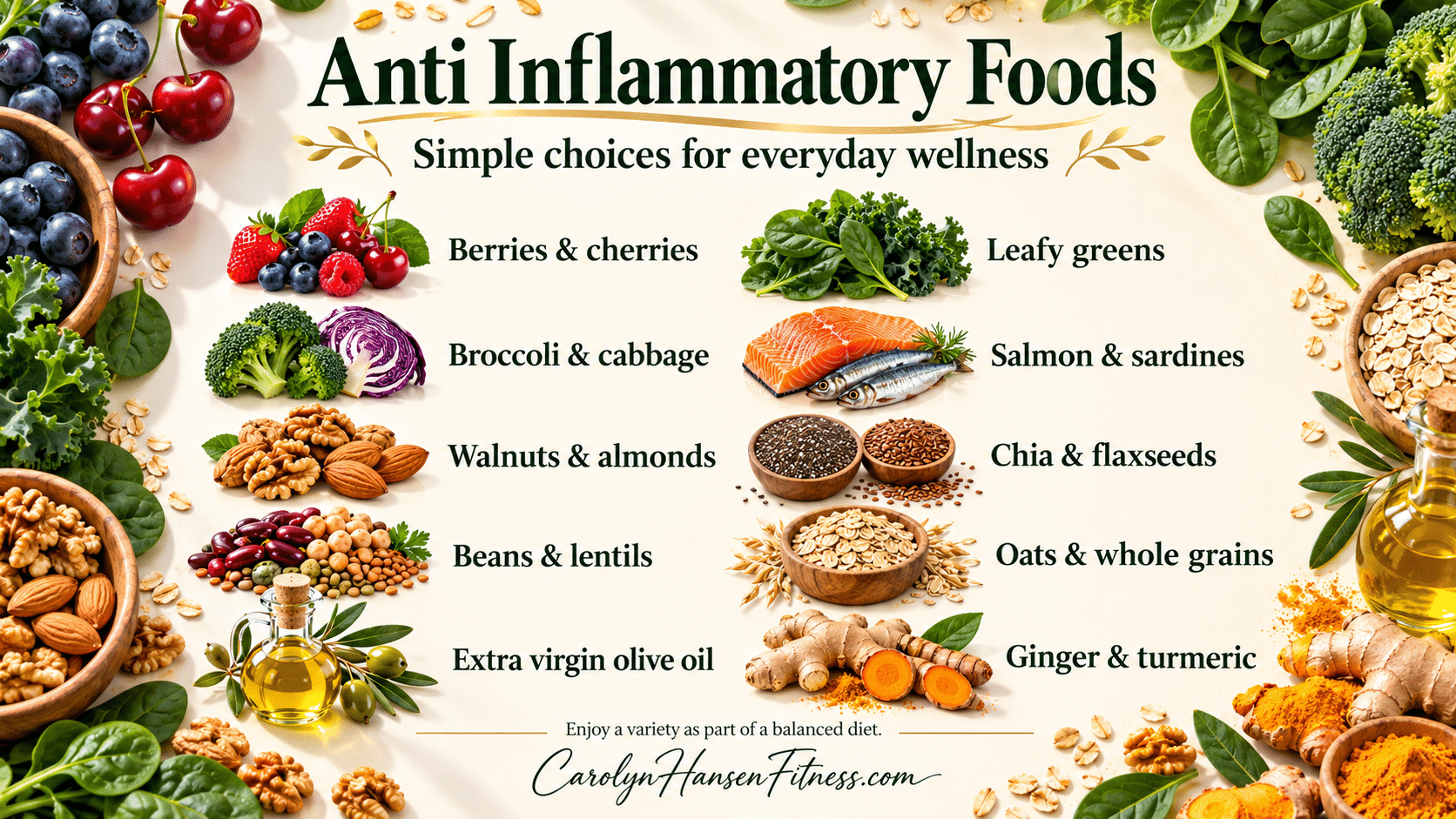
Anti inflammatory foods include fruits, veggies, fish, nuts and seeds, along with beans, whole grains, herbs and spices.
However, the word superfood can make it sound as though one particular ingredient has all the answers. In reality, no single food can cancel out an otherwise poor diet or switch off chronic inflammation. The benefits come from building a varied, nourishing eating pattern you can maintain.
Anti inflammatory Superfoods:
Colorful fruits and vegetables are a wonderful place to start. Berries, oranges, cherries, carrots, tomatoes and sweet potatoes bring different flavors, textures and nutrients to your meals.
Their colors come partly from natural plant compounds, many of which have antioxidant properties. Along with vitamins and minerals, these compounds are among the reasons a varied intake of plant foods is encouraged for better health.
Instead of getting caught up in which fruit is supposed to be the very best, choose several that you enjoy. Blueberries in your breakfast, an orange with lunch and sliced strawberries for dessert can make variety easy and delicious.
Fresh produce is lovely, but frozen options deserve a place in your kitchen too. Frozen berries can be stirred into oatmeal or blended into smoothies, while frozen broccoli and spinach make quick additions to dinner.
Keeping a few reliable options available also helps reduce waste. There is little benefit in buying a refrigerator full of vegetables if they spoil before you have time to prepare them.
And of course, always pay attention to your dark green leafy veggies. Spinach, kale, collard greens and other leafy vegetables contribute fiber, vitamins and beneficial plant compounds.
You do not have to sit down to an enormous bowl of raw greens to enjoy them. Stir spinach into scrambled eggs, add chopped kale to soup or tuck a handful of greens into a sandwich. Small portions added regularly can make these foods a natural part of your routine.
Cruciferous veggies also offer plenty in the way of vitamins, minerals and plant compounds. Broccoli, cauliflower, cabbage and Brussels sprouts provide variety while helping you build meals around more vegetables. These foods fit comfortably into the plant rich eating patterns recommended for supporting health.
Preparation can make all the difference when it comes to enjoying them. If boiled Brussels sprouts never appealed to you, try roasting them with a little olive oil. Shredded cabbage adds crunch to salads, while cauliflower can be added to soups, curries and vegetable trays.
Healthy eating becomes much easier when the food actually tastes good.
Other useful choices include oily fish such as salmon, sardines, herring and mackerel. These provide the marine omega 3 fats EPA and DHA, which are involved in regulating inflammatory processes.
However, all seafood does not provide the same amount of these fats. Cod and shrimp can contribute protein, but they are not equivalent to oily fish as sources of omega 3s. Lamb is red meat and should not be grouped with oily fish as an inflammation fighting superfood.
Try serving baked salmon with vegetables, adding sardines to whole grain toast or including fish in a familiar dinner recipe. The aim is to make these foods part of a balanced eating pattern rather than expecting one fish dinner to produce an immediate change.
Nuts and seeds offer another convenient way to improve everyday meals. Walnuts, almonds, chia seeds and ground flaxseed contribute combinations of fiber, unsaturated fats and other nutrients.
Walnuts, chia and flax also contain a plant form of omega 3 fat called ALA. This differs from the EPA and DHA found in fish, so they should not be considered identical sources.
A small handful of nuts makes an easy snack, while seeds can be sprinkled over oatmeal, salads or yogurt. Choosing plain or lightly salted varieties allows you to enjoy their flavor without relying on sugary coatings.
Another good choice is whole grains in place of some refined grain foods. Oats, barley, brown rice and whole wheat products provide options for breakfast, lunch and dinner.
This could be as simple as having oatmeal instead of a sugary breakfast pastry, serving brown rice with a vegetable dish or choosing whole grain bread for your sandwich. Look at ingredient lists when shopping, since a brown color or the word multigrain does not necessarily mean a product is made mainly from whole grains.
Beans, lentils and chickpeas are worth remembering too. They supply fiber and plant protein, and they can make meals more satisfying without requiring expensive ingredients. These foods are regular features of Mediterranean style eating.
If beans are not already part of your routine, begin with a small amount. Add a spoonful to soup, mix lentils into a familiar sauce or try hummus with sliced vegetables. Gradually increasing your intake may also make the extra fiber easier to tolerate.
Herbs and spices can help bring these ingredients together. Ginger, turmeric, garlic, cinnamon, rosemary and oregano add interest to everyday cooking.
Use ginger in a vegetable stir fry, cinnamon in oatmeal or garlic and herbs in a simple bean soup. Their flavor can help you enjoy meals made with basic ingredients. However, research involving concentrated extracts or supplements does not automatically establish the same effects from a small amount used in cooking.
What you drink counts –
Sugary drinks can contribute substantial amounts of added sugar without making a meal more nourishing. Water, sparkling water without added sugar and unsweetened tea offer simple alternatives.
If plain water seems boring, try adding lemon slices, cucumber or a few berries. Gradually reducing the sweetness of your drinks may be easier than trying to change every beverage habit at once. Limiting sugary beverages is one practical part of an anti inflammatory eating pattern.
Putting these ideas together does not require a complicated meal plan. Breakfast might be oatmeal with berries and chopped walnuts. Lunch could be vegetable soup with beans and whole grain toast. Dinner might include fish or lentils, brown rice and a generous serving of vegetables.
There is plenty of room to adapt those meals to your budget, preferences and schedule. Leftover vegetables can become tomorrow’s lunch, cooked grains can be prepared ahead and canned beans can save time on busy evenings.
The easier your healthy choices are to prepare, the more likely you are to keep making them.
Inflammation is an important part of our body’s defense mechanism, but when it persists it can cause damage rather than support healing. Chronic inflammation is involved in heart disease, type 2 diabetes and some cancers, although these conditions have multiple causes.
Food is one part of the picture. Regular physical activity, adequate sleep, avoiding smoking and finding manageable ways to handle stress also deserve attention. These habits work alongside a nourishing diet to support overall health.
And if you have ongoing joint swelling, persistent pain or a diagnosed inflammatory condition, dietary changes should support the care you receive rather than replace it. Rheumatoid arthritis, for example, often requires treatment to control disease activity and help prevent joint damage.
Paying attention to what you eat and incorporating a variety of anti inflammatory foods into your diet is a useful step toward protecting your health. You do not need a perfect menu or a cupboard full of products promising remarkable results.
Begin with your next meal. Add something nourishing, choose something colorful and give those simple choices a regular place in your day.