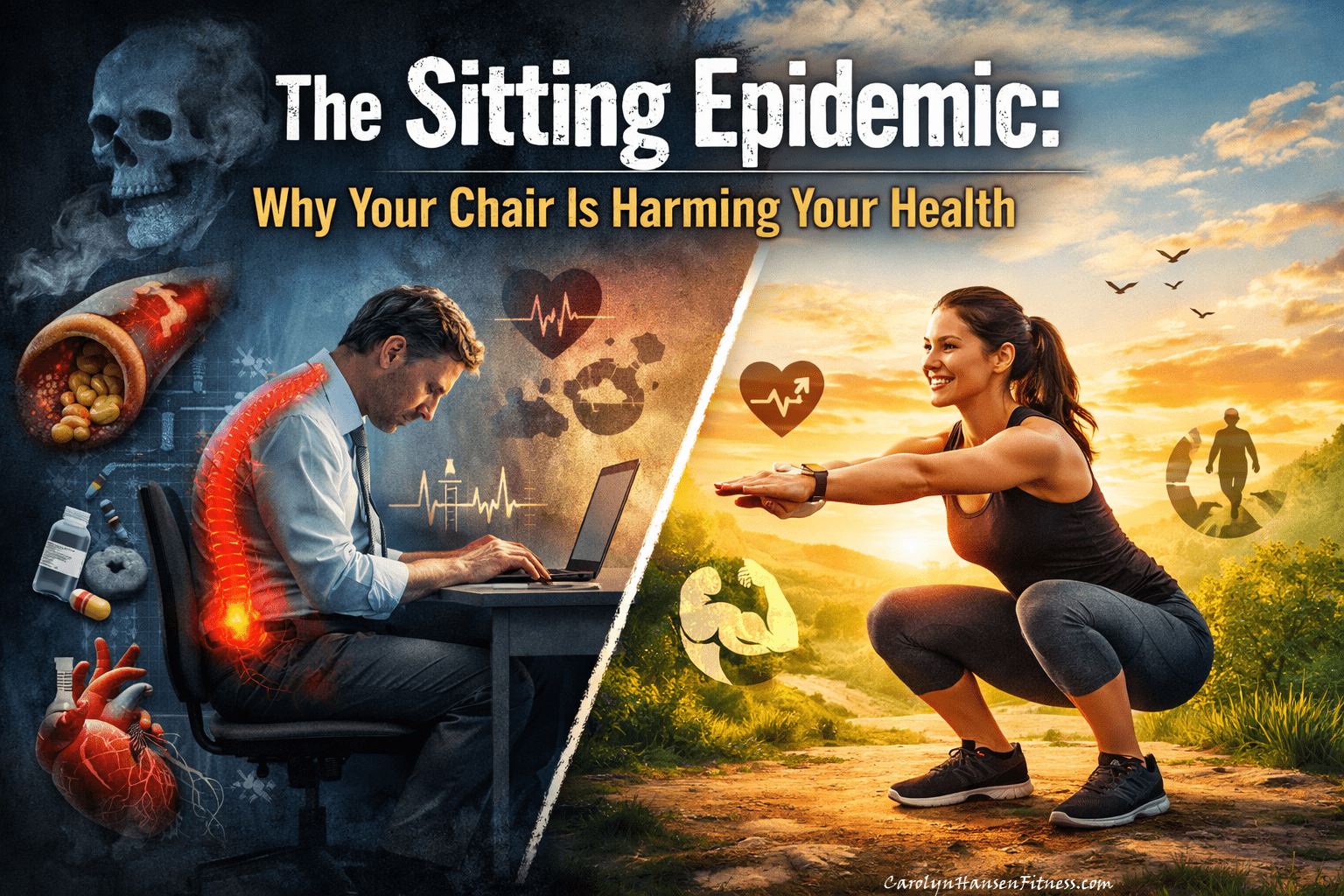
Studies continue to confirm that sitting for extended stretches throughout the day — as most of us do — quietly undermines our cellular and metabolic health.
In fact, prolonged sitting has become so hazardous that many experts now refer to it as “the new smoking.” On average, adults spend close to nine hours a day seated, often divided between work, commuting and evening downtime.
Sitting in and of itself is not the enemy. It is natural and even restorative when done briefly. The concern arises with sedentary behavior — any waking activity done in a seated or reclined posture — which has been strongly associated with serious physical and mental health consequences.
The World Health Organization identifies physical inactivity as the fourth leading risk factor for global mortality. Compared to previous generations, we move far less, largely due to technological advances and the steady decline in manual labor.
We live in an era of convenience. Nearly everything we need is accessible at the touch of a screen. While this ease has improved efficiency and comfort, it has also brought unintended trade-offs to our well-being. But the human body was engineered for movement, not stagnation.
When assessing how much you sit each day, remember to account for the time spent in the car, at your desk, during meals and unwinding in front of a screen at night.
If much of your day is spent seated at work, it may be wise to take a closer look at how this pattern is influencing your long-term health — and what small changes could begin to reverse it.
There is not one system in your body that remains untouched by excessive sitting.
Your immune system weakens, your cardiovascular system becomes strained, and your endocrine system — the delicate balance of hormones that regulates everything from mood to metabolism — is disrupted by a sedentary lifestyle.
The Sitting Antidote
Prolonged sitting is also a common — and often overlooked — contributor to musculoskeletal disorders such as neck pain, back pain, arthritis and carpal tunnel syndrome. Spending too much time seated reduces overall flexibility, especially in the hips and lower back. Healthy, flexible hips help stabilize and balance the body, but when we sit for hours, the hip flexor muscles shorten and tighten. Over time, the muscles that support the spine can weaken, making proper alignment more difficult and increasing the likelihood of injury and chronic back issues.
Extended sitting often leads to stiffness and balance problems as well. If you are hunched over a computer or desk throughout the day, your lumbar spine bears the brunt of that strain, compounding discomfort and long-term structural stress.
A sedentary lifestyle also increases the risk of weight gain, type-II diabetes and cardiovascular conditions such as heart disease and stroke. When you sit for long periods, your metabolism slows. HDL (the “good” cholesterol) decreases, calorie burning drops significantly, and levels of lipoprotein lipase — an enzyme essential for breaking down fat — decline sharply.
Moreover, sitting for prolonged periods each day:
• Slows metabolic activity and calorie expenditure — up to 70 percent less than even light walking
• Increases insulin resistance, raising the risk of type-II diabetes
• Elevates LDL (the “bad” cholesterol)
These combined effects contribute to lower energy levels, increased weight gain, higher risk of colon and breast cancer, and ultimately a shortened life expectancy.
Prolonged sitting and standing puts excessive pressure on your legs which causes the veins to stop working properly. This is called venous insufficiency. Excess sitting causes circulation issues and reduces blood flow to your organs.Too much sitting can also affect mental health. Studies have shown that people who sit for seven or more hours are three times more likely to have symptoms of depression than those who sit for a shorter period.
The body is an inflammatory environment and when high stress hormones have no release (through physical activity), anxiety and depression tend to result. Then depression zaps our energy and motivation even further which results in even more sitting!
It is a vicious circle!